Your guests book with you. The fees stop.
Your own page, your rates, your calendar. A guest picks their dates and pays by card right there, and the night blocks on Airbnb the same minute. Your Airbnb listing stays where it is.
What the platform takes off your place, per year
Type your own numbers. This is the money that leaves the room before anyone sleeps in it.
Estimates — platform fees vary by listing and fee model (some hosts are on a host-only ~15% plan, which moves the same money to your side of the table). The $312 is Lodgify’s Starter plan for a year, billed to you, not to me; Lodgify takes no cut of your bookings. Card processing on a direct booking runs about 3%, the same as any card payment anywhere, and that is yours too.
Three steps, and I do two of them
I set up Lodgify in your name
The booking engine is an account that belongs to you, not to me — your login, your bank details, your rates. I connect it to your Airbnb or Vrbo listing and switch card payments on.
I build the site around it
Your photos, your words, your real guest reviews, and the booking box built into the page — not bolted on the end. One page for one cabin, one page per cabin if you have several.
Guests book and pay on your page
They pick their nights, pay by card, and get the confirmation. That night blocks on Airbnb the same minute, and a night booked on Airbnb blocks on your page the same way. The money lands in your bank; I never touch it.
A booking site, not a brochure
Built once, in your name, on your own accounts. Nothing monthly to me.
They pay you, right there on the page
The guest picks their dates, pays by card, and the confirmation goes out. That is the whole booking. Card processing is about 3%, the same as any card payment anywhere, and it comes off your side.
You cannot double-book yourself
The booking box talks to Airbnb, Vrbo and Booking.com both ways, in minutes, so a night is taken everywhere the moment it is taken anywhere. Nothing to update by hand.
Your reviews, on your own page
The write-ups your guests already left you, word for word, where somebody deciding at 11pm can read them without a platform wrapping them in ads for other people’s cabins.
The card by the coffee maker
A little card with your site’s QR code on it. The family that loved it this year books direct next year — they save the service fee, you keep the margin, and your best guests stop costing you a cut.
A page of your own to watch it on
Every client gets a private page: a live preview of the site, what I checked and what I found, and every change we make, dated, so you can see what you paid for.
Here is one I built to show people
Timberline Hideaway is a made-up cabin on a real page. Open it on your phone and tap through it — the booking box, the reviews, the house rules, all of it.
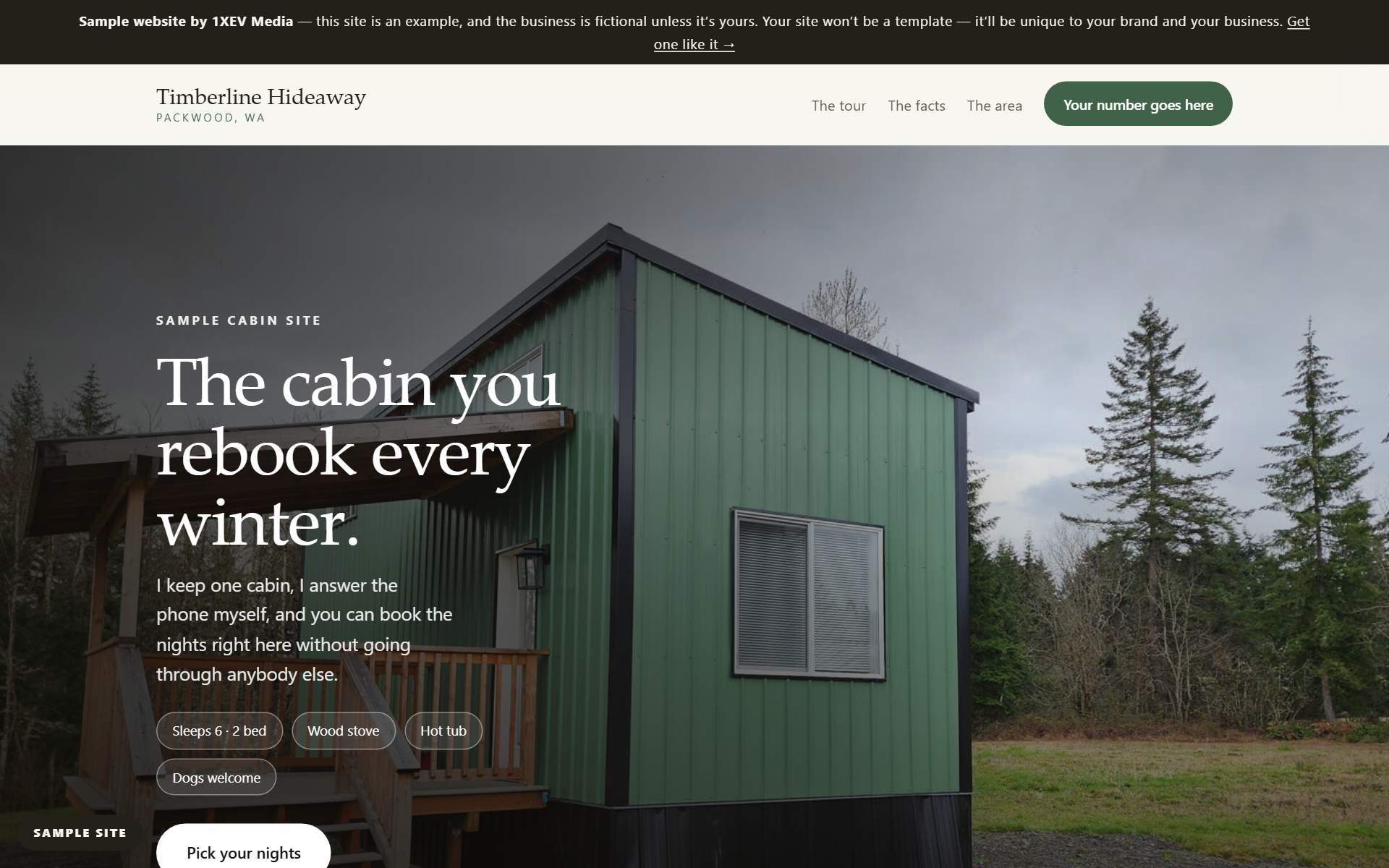
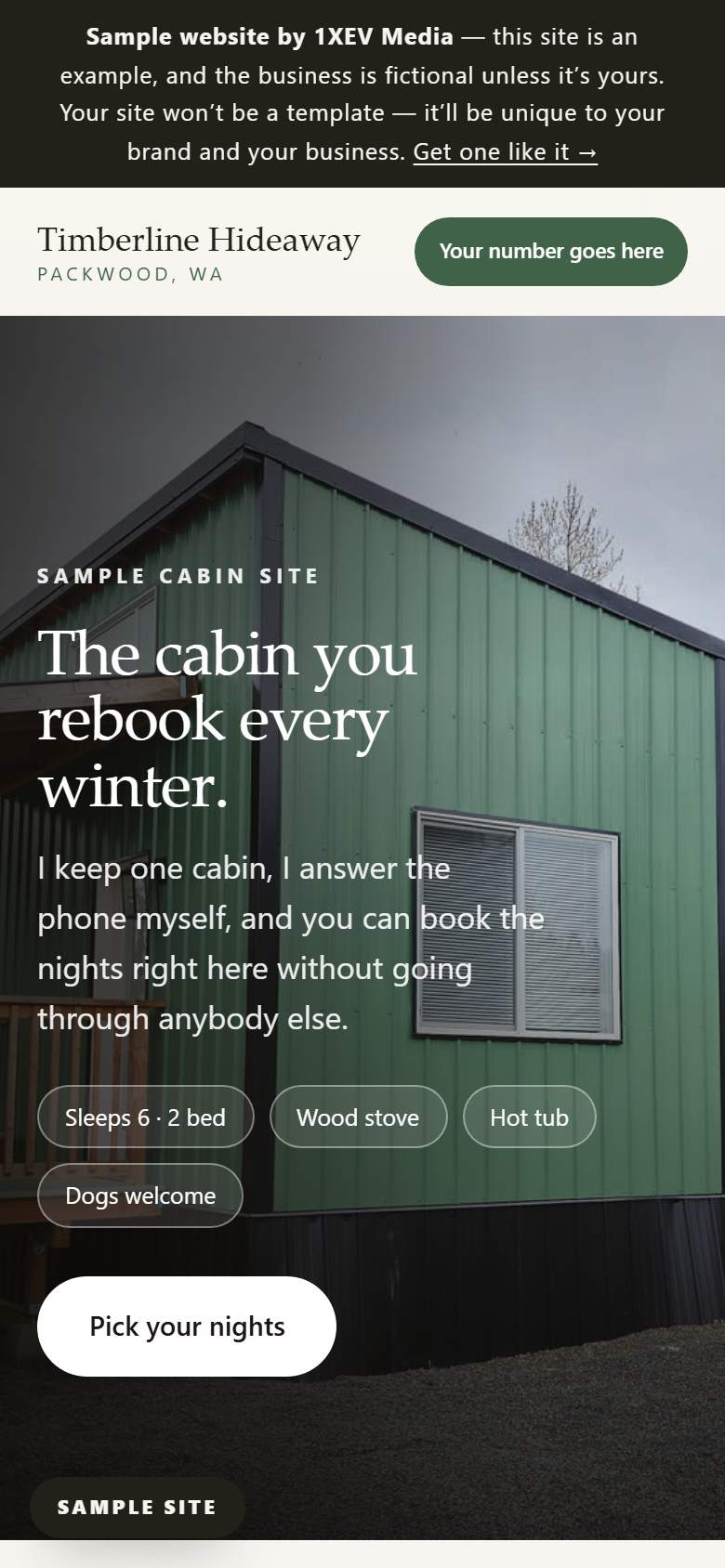
The same page on a phone and on a laptop. Yours would be your cabin, your words and your photos — never this one with the names swapped.
Worth it for some hosts, not yet for others
A host up in Packwood with five cabins already books this way on his own site — staycampcabins.com. Twenty minutes up the road, same mountain, same guests.
This is worth doing if
- You have twenty or more reviews and people come back.
- Guests ask you about next year before they leave.
- You already hand out your number, your Instagram, or a card.
- You have more than one place, or a lodge with rooms.
Not yet, if
- The listing is brand new and has no past guests.
- Nobody has stayed twice, so there is nobody to send there.
- You would rather not own the calendar or the refunds.
- In that case keep filling the platform first. I will say so.
The parts other people gloss over
Do I keep my Airbnb listing?
Yes, and you should. The platform is where strangers find you first. Direct booking is for your repeat guests, your Instagram bio, the card in the cabin, and everybody who Googles your rental by name. Second door, same house.
What happens with lodging tax?
On platform bookings, Airbnb usually collects and remits lodging taxes for you. On direct bookings that is yours to handle. Lodgify can add the tax as a line at checkout so the guest pays it; remitting it is still yours. I will show you where it goes on the state return, and your bookkeeper can take it from there. It is a real step, not a big one, and I would rather say so up front than have it surprise you.
What about damage deposits and house rules?
Your rules page, your deposit policy, your cancellation terms, written once and plainly on your own page instead of buried in a platform’s legalese.
Does my rental show up on Google Vacation Rentals?
It can, later. That listing needs Lodgify’s Professional plan at $504 a year instead of Starter. It is not the starting point, and I would rather you had direct bookings coming in first.
Who touches the money?
You do. The card payment goes through your own Lodgify account into your own bank. I never touch a guest’s money and neither does a platform.
Once. Not a percent of every night.
Send me your listing and I’ll go look at it.
Five questions. The listing link is the one I really need — everything else I can work out or ask you about later. I read every one of these myself.
- I’ll tell you if it isn’t worth doing yet
- Nothing is booked and nothing is owed by sending this
- Chehalis, WA — you deal with me, not an office